

Creative Digital Strategies
for Business Success
Contact Information
Landing Page Design Services
Every Rupee You Spend on Traffic Hits This Page First. It Either Converts or It Doesn't.
A landing page has one job. Not to inform. Not to impress. To convert the specific visitor arriving from the specific campaign that sent them there, into a lead, a trial sign-up, a purchase, or a booked call. Nothing else on the page counts.
The median conversion rate from visits to a landing page is 6.6% across all industries. Most pages sit well below that. The gap between a landing page that converts at 3% and one that converts at 8% is not the ad spend. It's the page, the headline that either matches the promise the ad made or doesn't, the form that either asks for what's necessary or asks for four fields more than that, the load time on mobile that either keeps the visitor or loses them before they've read a word.
MultiDivs designs and builds landing pages from Ahmedabad, India for businesses running paid campaigns, product launches, and lead generation programs in the US, UK, EU, and Australia. Figma design, copy framework, and live build on WordPress or a standalone deployment, delivered at offshore rates with documented files you own.
5.0 on Clutch
150+ builds shipped
You own every file
multidivs.com — engineered
Your product, engineered

Core Web Vitals
LCP · INP · CLS ✓
owner = "you"
no lock-in
Paid ads
Product launches
Lead gen
SaaS trials
Event sign-ups
Fixed price
Figma design
Copy framework
WordPress or standalone build
Mobile-first
A/B variant readyPaid ads
Product launches
Lead gen
SaaS trials
Event sign-ups
Fixed price
Figma design
Copy framework
WordPress or standalone build
Mobile-first
A/B variant ready
The honest test
When does a landing page actually need to be designed from scratch?
Not always. A homepage with a tracked CTA often outperforms a purpose-built landing page for low-volume campaigns where the traffic quality is unknown. A Webflow or Unbounce template, configured well, is faster than a custom build when the campaign is a test and the hypothesis isn't proven.
The point where a custom-designed landing page earns its cost is the point where the campaign is repeatable, the traffic volume is meaningful, and the conversion rate difference between a mediocre page and a good one is measurable in leads or revenue per month. At that point, the page is a media asset, it runs for months and the quality of its design compounds every time someone clicks the ad.
"Most of our clients come to us after running ads to a page they threw together in a builder. The ads work. The page doesn't. A properly designed page changes the economics of a campaign that's already proven it can get clicks.
— Ravi, MultiDivs
Diagnosis
Signs your current landing page is the weak link in the campaign
These problems don't appear in the ad dashboard. They appear in the conversion data the ad dashboard pulls from the page.
01
The ad CTR is healthy but the conversion rate is low
The ad is working, people click. The page isn't, people leave. This disconnect points specifically to the page. The ad's promise and the page's opening are misaligned, the form is too long, the load time on mobile is too slow, or the CTA doesn't match what the visitor came prepared to do.
02
The same creative is running to every audience segment
One landing page for cold traffic from display, warm retargeting from social, and branded search. Each of those audiences arrives with a different level of awareness and a different objection. A page designed for all of them converts none of them as well as a page designed for one.
03
The page loads in over three seconds on mobile
A one-second LCP improvement delivers an 8.4% conversion lift. A page that takes four seconds to load on a 4G connection is losing a measurable percentage of conversions before the visitor has seen the headline. The landing page builder that generated it may be convenient. It is not fast.
04
The form asks for more than the conversion moment warrants
A top-of-funnel lead magnet that asks for company size, annual revenue, and job title alongside name and email is asking for information appropriate to a sales qualification call, not a content download. Form length and conversion rate move in opposite directions. Every unnecessary field costs completions.
05
There is no variant to test against
A single page with no alternative is a single data point. Only 1 in 8 A/B tests achieves significant changes, which means you need to run eight to find one that moves the metric. A page built for testing with variant-ready structure is part of the design brief, not an afterthought.
06
The page was built by whoever built the website
The website developer built the landing page because it was convenient. The skill sets are different. A landing page built by someone optimising for visual consistency with the site is not the same as one built by someone optimising for conversion from a specific traffic source. The outputs look similar. The performance differs.
Worth it vs not
When to commission a custom landing page and when not to
DESIGN AND BUILD
// a custom-designed landing page earns its cost when
- The campaign is repeatable and will run for long enough that a 2–3% conversion rate improvement compounds into a meaningful lead or revenue difference over its lifetime.
- The audience segments sending traffic have materially different awareness levels and objections that a single generic page can't address.
- The campaign budget is large enough that the CPL difference between a 3% page and a 7% page represents real money, at $50 CPL and 500 clicks/month, moving from 3% to 7% saves $1,900 per month in acquisition cost.
- The page needs to load under two seconds on mobile, which rules out most no-code builder outputs on shared infrastructure.
- You're launching a product, a service tier, or a pricing change and the page needs to match the brief precisely, not approximate it through template modifications.
USE A TEMPLATE OR BUILDER
// a configured template is enough when
- The campaign is a test with an unvalidated hypothesis. Validate the offer first, then invest in the page.
- The monthly traffic to the page is below the threshold where a conversion rate difference produces a meaningful lead volume change. A page with 100 visitors per month converting at 3% versus 7% is 4 leads. A page with 10,000 visitors converting at the same differential is 400.
- Speed to launch matters more than performance optimisation at this stage. A builder page live in 48 hours beats a custom page live in three weeks when the campaign window is short.
- The design asset will be retired after a single campaign run.
If a builder handles the campaign, that's the right tool. The custom design earns its cost on campaigns that run long enough for conversion rate to matter.
Our projects
All projects
Featured WordPress development
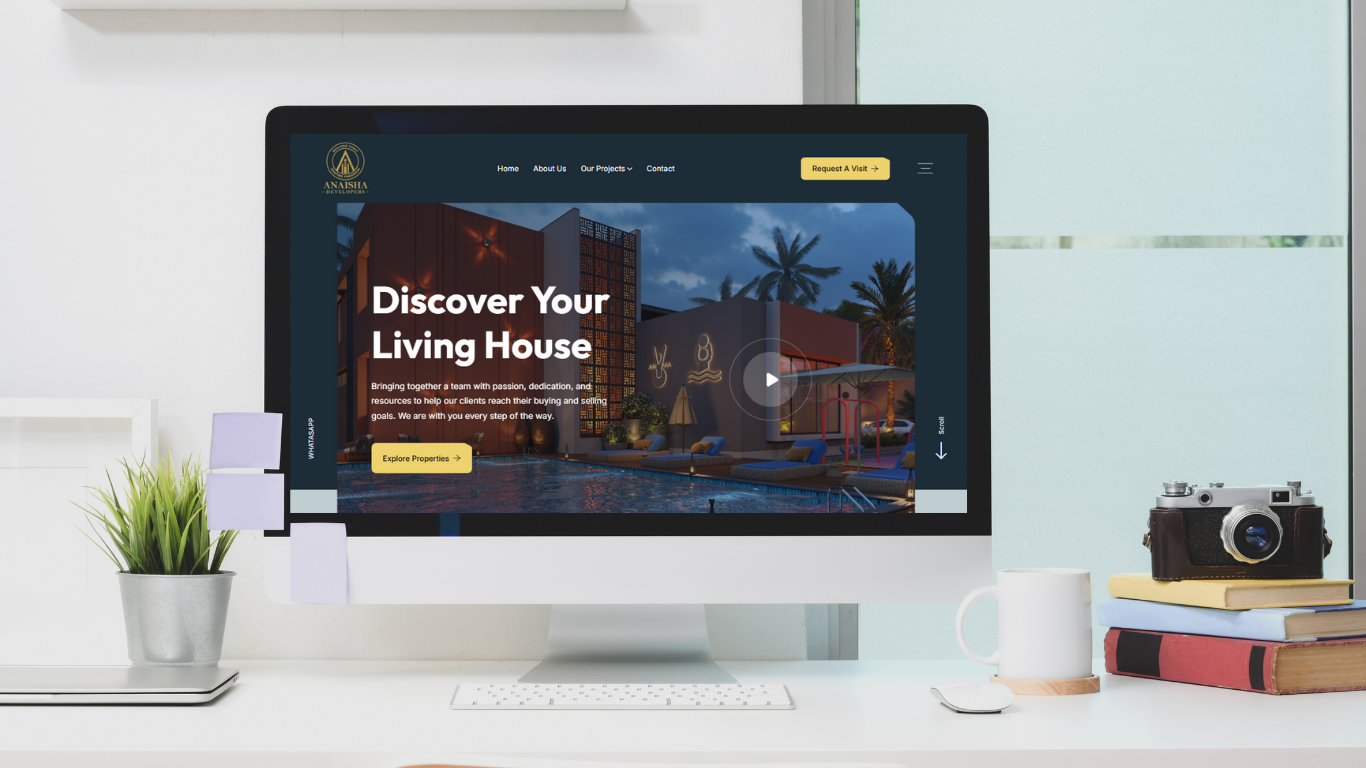
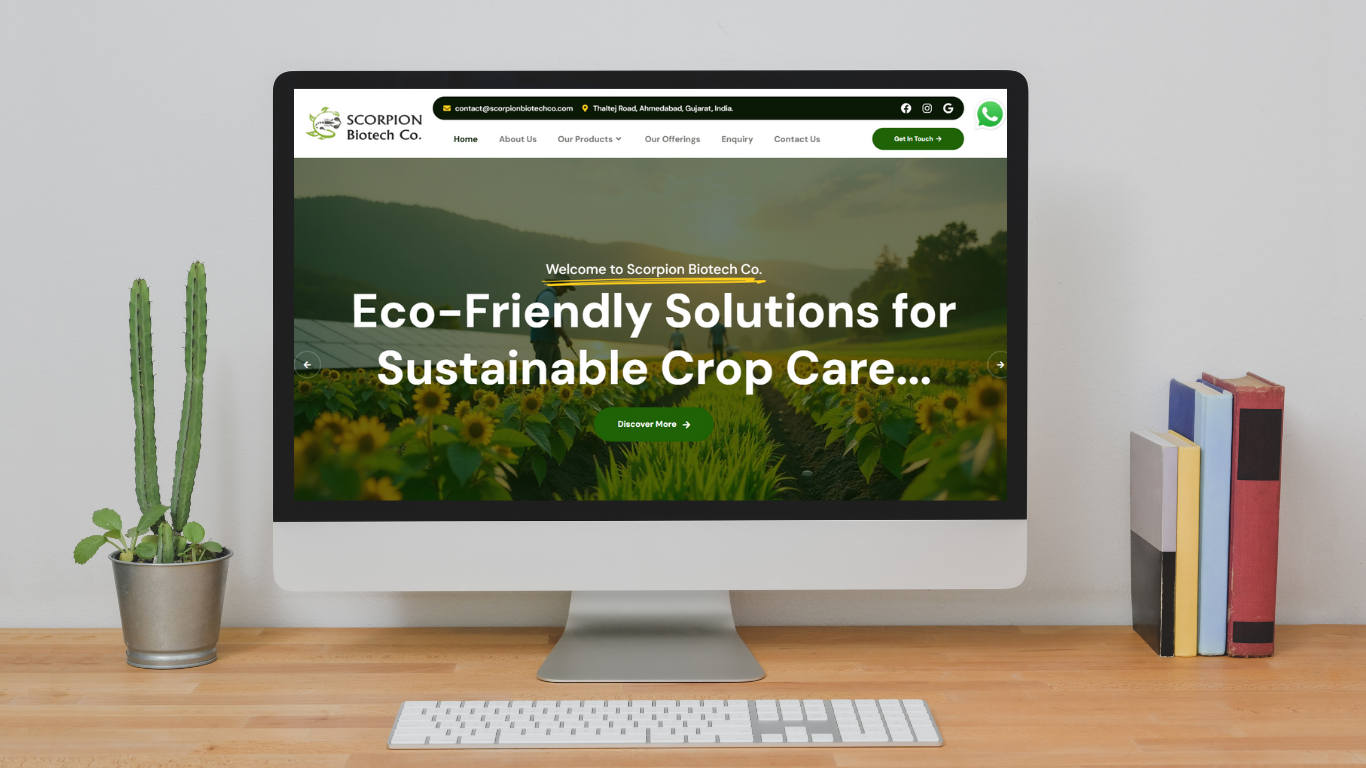
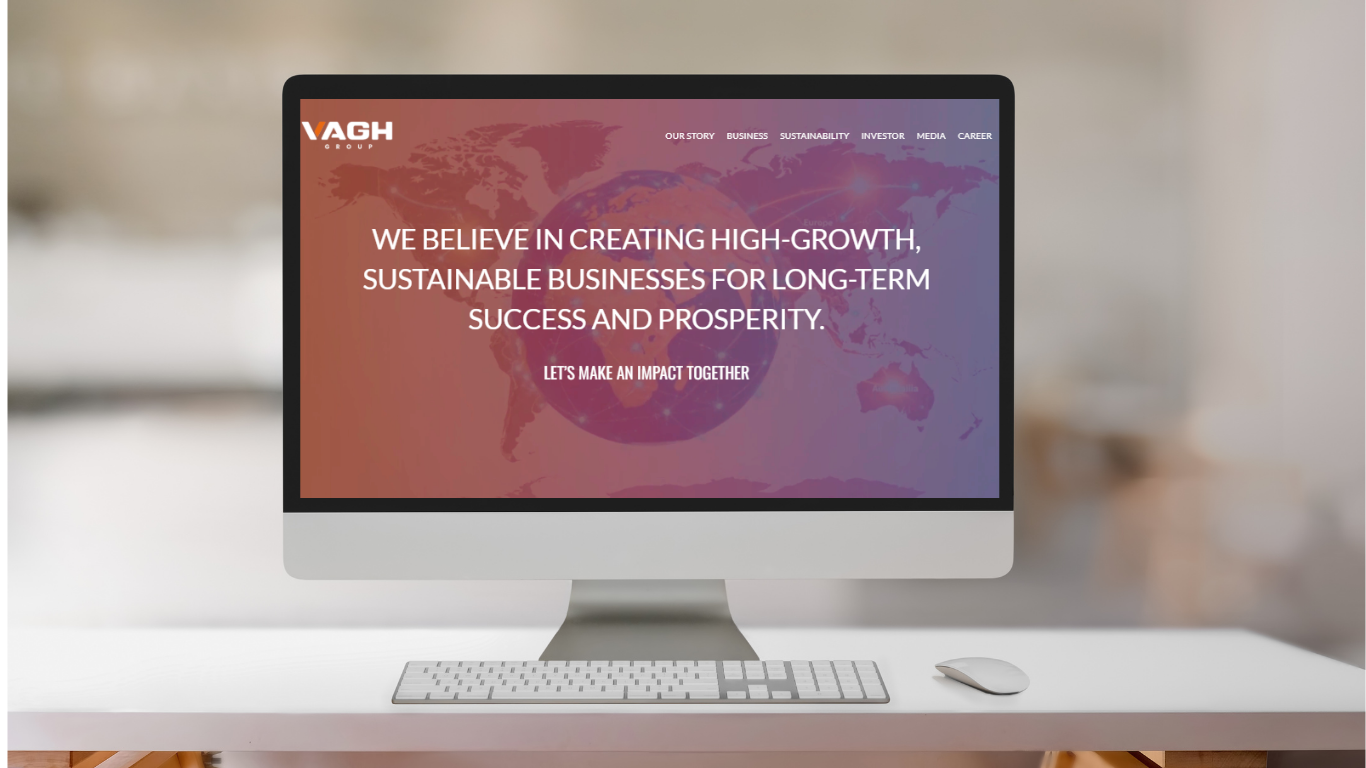
How we build
What a landing page engagement with MultiDivs looks like
A landing page that converts requires more front-end thinking than back-end development. The work is heavier in brief and strategy than in build hours, and that's the correct ratio.
F
STEP 01/05
Frame the conversion brief
Who is the visitor, where did they come from, and what is the single action the page needs them to take? The campaign source, the audience segment, the awareness level, and the one CTA, established before a single element is designed. A landing page brief is not "build something like this." It is the specific conversion goal and the specific visitor it needs to achieve it with.
R
STEP 02/05
Research the offer and the objection
What does the visitor need to believe to convert? What is the most common reason they don't? Competitive context, existing page performance data if available, and the gap between what the ad promises and what the page delivers. The headline and the value proposition come from this stage, not from the designer's instinct.
A
STEP 03/05
Architect the page structure
Section order, copy hierarchy, proof placement, form position, and CTA logic, mapped as a wireframe before visual design begins. The structure determines whether the page builds conviction in the right sequence. Visual design applied to a wrong structure produces a beautiful page that doesn't convert.
M
STEP 04/05
Make: design in Figma, build live
High-fidelity Figma design with mobile and desktop layouts, all interactive states specified, and the A/B variant designed alongside the primary page if the brief includes testing. Live build on WordPress, a standalone HTML deployment, or the client's preferred CMS, with page speed tested on a throttled mobile connection before delivery, not after.
E
STEP 05/05
Evolve: track, test, improve
Conversion tracking configured and verified before go-live. Analytics event set up for the specific CTA action, not just a page view. If the brief includes A/B testing, the variant structure is in place and the test is running from day one of traffic. Post-launch performance data feeds the next iteration brief.
A single landing page with a copy framework and live build takes one to two weeks. A campaign package with multiple audience variants, A/B structures, and tracking implementation takes two to four weeks. Timeline confirmed at brief stage.
Under the hood
What separates a landing page that converts from one that doesn't
Each decision below moves the conversion rate. None of them is visual polish.
05 · Mobile performance
The majority of paid traffic lands on mobile. Mobile converts 40% less than desktop, unless the page is built for it.
Mobile has a 40.2% conversion gap versus desktop. That gap is not closed by making the desktop design responsive. It's closed by designing the mobile experience as the primary experience, scroll depth, tap target sizing, form behaviour on a touchscreen keyboard, and load time on a 4G connection measured in field data.
4.84%
Avg conversion rate 2026
+8.4%
Lift per 1s LCP gain
40.2%
Mobile conversion gap
01
Headline and message match
The headline's job is to confirm to the visitor that they arrived in the right place, that the promise the ad made is the promise the page keeps. A well-written headline can lead to a 3x higher conversion rate. Message match between ad and page is the single highest-leverage copy decision on a landing page and the most commonly skipped.
02
Copy hierarchy and conviction sequence
Above the fold establishes relevance. The mid-page builds the case, specifics, proof, objection handling. Below the fold closes with urgency and a final CTA. The sequence matters. A page that leads with features before establishing the problem the visitor came to solve loses them before they reach the proof.
03
Form design and field reduction
Personalized CTAs convert 42% more visitors than generic ones. Form length moves conversion rate in the opposite direction from field count. Every field that isn't essential to the conversion moment costs completions. The form brief is not "collect what marketing wants." It's "collect the minimum required to make the follow-up action possible." hostinger
04
Social proof placement and specificity
Testimonials are featured in 36% of the top-performing landing pages. Generic proof, "Great product, highly recommend", performs worse than specific proof with a named outcome, a company, and a role. Proof placement adjacent to the conversion point, not buried at the bottom, is what makes it functional rather than decorative.
06
Page speed and technical build
The page is built clean, no page builder bloat, no unnecessary script loading, no render-blocking third-party tags before the fold. Tracking pixels and analytics loaded asynchronously after the content. LCP measured in field conditions on a throttled connection, not a lab test on a gigabit connection. Every second of load time recovered is an 8.4% conversion lift compounding across every session.
07
Conversion tracking and event configuration
Goal completions configured in Google Analytics 4 and the relevant ad platform, Google Ads, Meta, LinkedIn, before traffic goes live. Not a page-view proxy for the conversion event. The actual CTA action, verified with a test conversion before the campaign launches. Reporting that tells you what's actually happening, not what the platform assumes is happening.
08 · A/B variant structure
Every landing page delivered with a variant-ready structure, the primary CTA, headline, or proof section isolated so a second variant can be built without redesigning the page. Business sites with 10–15 landing pages generate 55% more customers than those with fewer than 10. More targeted pages, tested systematically, compound conversion rate improvement across a campaign programme.
WE BUILD WITH THE BEST TOOLS AND BEYOND THEM
Figma
WordPress
HTML/CSS
Google Analytics 4
Google Tag Manager
Meta Pixel
Hotjar
Unbounce
Webflow
PageSpeed InsightsFigma
WordPress
HTML/CSS
Google Analytics 4
Google Tag Manager
Meta Pixel
Hotjar
Unbounce
Webflow
PageSpeed Insights
An honest comparison
Builder template vs custom design vs full campaign system
| Criteria | Builder template | Custom designed page | Full campaign system |
|---|---|---|---|
| Time to live | Hours | 1–2 weeks | 2–4 weeks |
| Message match to audience | Generic | Specific to one segment | Multiple variants per segment |
| Mobile performance | Builder-dependent | Built to spec | Built to spec per variant |
| A/B testing readiness | Limited | Designed in | Fully structured |
| Tracking configuration | Basic | Verified pre-launch | Multi-platform, verified |
| Cost (India-based) | Template cost only | 800–3,000 per page | 2,500–8,000 |
| Cost (US/UK agency) | Template cost + hourly | 3,000–12,000 | 10,000–30,000+ |
| Best for | Hypothesis testing, short campaigns | Repeatable campaigns, proven offers | Multi-segment programmes, lead gen at scale |
A builder template is the correct starting point for a campaign that hasn't proven the offer yet. A custom-designed page is the correct tool when the campaign is repeatable and conversion rate differences compound over time. The right choice depends on where the campaign is in its lifecycle.
The payback
Where landing page investment pays back
~4×
UX-improved pages vs baseline
Landing pages with an improved UX design tend to perform four times better. At a 6.6% average conversion rate, a page designed properly for its specific audience and traffic source reaches the upper range of what the channel can produce. The design investment is recovered in reduced CPL within the first campaign month at meaningful traffic volumes.
Hostinger/Unbounce, 202655%
More customers from 10–15 landing pages vs fewer than 10
Business sites with 10–15 landing pages generate 55% more customers than those with fewer than 10. One generic page for all audiences is the single most common landing page mistake in lead gen programmes. Segment-specific pages built on a shared design system are faster and cheaper to produce than starting from scratch each time.
// HubSpot0
Guesswork in conversion tracking
Every landing page delivered with conversion tracking verified before traffic goes live. The campaign dashboard reports the actual CTA completion rate, not a page view or a session as a proxy for conversion. Numbers you can make decisions from, not numbers that require interpretation.
Ownership
Do you own the files? Yes. Design, build, and copy framework.
The Figma source files, the live page code, the copy document, the tracking configuration notes, all transferred at delivery. No monthly subscription to a builder platform where your page lives until you stop paying. No design file locked to the agency's account. Source files and live assets transferred, yours to use, modify, or hand to another team.
// page.config
owner = "you";
figma_file = "transferred";
build = "full_source";
owner = "you";
figma_file = "transferred";
build = "full_source";
Learn from these
Common mistakes in landing page projects
A
Sending all traffic to the homepage. A homepage serves multiple audiences and multiple goals. A landing page serves one audience and one goal. Sending paid traffic to a homepage dilutes the message match that landing pages exist to create, and the conversion data from a homepage tells you almost nothing useful about the campaign.
B
Writing the headline last. The headline is the highest-leverage copy element on the page and the first thing the visitor reads. Designing the page visually and then dropping in headline copy produces a headline that fits the space rather than one that converts the visitor. Copy brief before design brief, always.
C
Optimising for looks in Lighthouse rather than speed in the field. A page that scores 90 in a Lighthouse lab test on a fast connection may still load in four seconds for a visitor on a 4G connection with a $150 Android phone. Test in field conditions. The lab is a proxy. The visitor's device is the reality.
D
Not removing the navigation. A landing page with a full site navigation gives the visitor eleven ways to leave and one way to convert. Navigation removal is not a design preference, it is a conversion architecture decision. Remove it unless the brief has a specific reason not to.
E
Launching without verified tracking. A campaign that runs for three weeks before someone notices the conversion pixel wasn't firing produces three weeks of unattributed conversions, a CPL calculation that's wrong, and a budget decision made on bad data. Test the conversion event before the first paid click arrives.
Answered directly
Frequently asked questions
What is the average landing page conversion rate?
The average landing page conversion rate is 6.6% across all industries per Unbounce's data. A separate 2026 benchmark report analysing 4.4 million sessions puts the average at 4.84%. (Visionary Marketing, 2026) Industry varies significantly, SaaS lead gen pages average 3.5% with top performers at 8.1%, healthcare averages 4.1% with top performers at 9.3%. (fibr.ai, 2026) Your benchmark is the conversion rate the same traffic source produces on a comparable page for a comparable offer, not an industry average.
How much does landing page design cost in India?
India-based landing page design and build typically costs $800 to $3,000 for a single page including Figma design, copy framework, and live build. A campaign system with multiple audience variants and tracking implementation runs $2,500 to $8,000. US and UK agencies charge $3,000 to $12,000 for a single page and $10,000 to $30,000+ for a full campaign system. The offshore rate differential is 60–70% of equivalent US/UK pricing.
How long does a landing page take to design and build?
One to two weeks for a single landing page including design, copy framework, build, and tracking configuration. Two to four weeks for a multi-variant campaign system. Timeline confirmed at brief stage, not estimated before the brief is written.
Do you write the copy or just design?
We provide a copy framework, headline options, value proposition structure, proof section outline, CTA copy, based on the conversion brief. Full copywriting is available as an add-on. If you have an existing copy document, we design and build to it. Copy brief and design brief are handled in the same engagement.
Can you build the page on our existing WordPress site?
Yes. As a new page on an existing WordPress install, as a custom page template, or as a standalone deployment if the campaign needs to be isolated from the main site's load. Platform confirmed during the brief stage.
Do you provide A/B test variants?
Yes. The primary page and one variant, typically testing a different headline, CTA, or proof configuration, designed and built in the same engagement. Test structure confirmed at brief stage based on what hypothesis the campaign is trying to validate.
Do you configure the tracking or does our team do it?
We configure Google Analytics 4 conversion events, Google Tag Manager triggers, and ad platform pixels, Meta, Google Ads, LinkedIn, as part of the build. Every conversion event is verified with a test completion before go-live. If your team prefers to own the tracking layer, we document exactly what needs to be configured and where.
Can you design multiple pages for different audience segments?
Yes. Segment-specific landing pages built on a shared design system are faster and cheaper to produce in volume than individual page briefs treated independently. Campaign packages with three to eight audience-specific variants are scoped and priced as a system, not as eight individual page projects.
Ready when you are
Tell us the campaign and the conversion goal
Send us the traffic source, the audience, the offer, and what you're trying to get the visitor to do. We'll scope the page, confirm the timeline, and give you a number.
+91 9898 927 052 · contact@multidivs.com