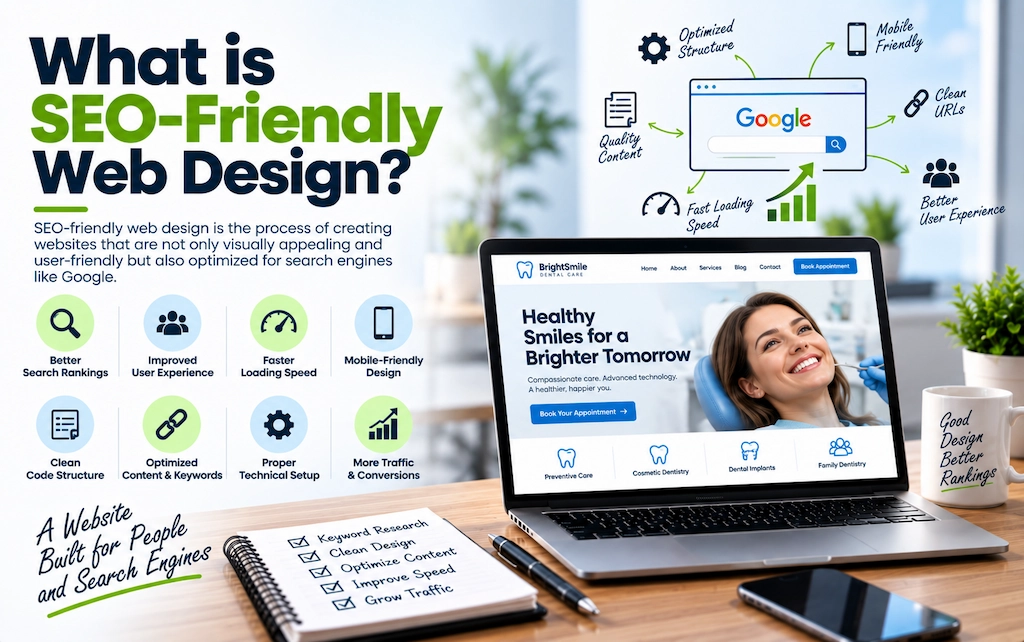
What is SEO-Friendly Web Design?
SEO-friendly web design is the process of designing and developing a website in a way that makes it easy for search engines like Google to crawl, index, and understand — while also delivering an excellent user experience.
Unlike traditional web design that focuses only on appearance, SEO-friendly web design combines visual design, technical SEO, site structure, and performance optimization to improve search rankings and conversions.
In simple terms, it means building websites that look great, load fast, work on all devices, and rank well on search engines.
Why is SEO-Friendly Web Design Important?
1. Improves Search Engine Rankings
Search engines favor websites that are fast, mobile-friendly, well-structured, and easy to navigate. An SEO-friendly design helps your site meet Google’s ranking factors.
2. Better User Experience
Good design and SEO go hand in hand. Clear navigation, readable content, and fast loading pages keep users engaged and reduce bounce rates.
3. Higher Conversion Rates
When users can easily find information and trust your website, they are more likely to contact you, submit a form, or make a purchase.
4. Long-Term Organic Traffic
Unlike paid ads, SEO-friendly websites continue to attract organic traffic over time without recurring ad costs.
Key Elements of SEO-Friendly Web Design
1. Mobile-Responsive Design
Google uses mobile-first indexing, meaning your website must work perfectly on smartphones and tablets.
- Responsive layouts
- Touch-friendly buttons
- Readable fonts on small screens
2. Fast Page Loading Speed
Page speed is a confirmed Google ranking factor.
Best practices include:
- Optimized images
- Browser caching
- Clean code
- Minimal scripts
A fast website improves SEO and user satisfaction.
3. Clean Website Structure & Navigation
A well-organized website helps both users and search engines understand your content.
- Logical menu structure
- Clear internal linking
- SEO-friendly URLs
4. Optimized On-Page Content
SEO-friendly design supports content optimization by properly using:
- H1, H2, H3 headings
- Keyword-optimized titles
- Meta descriptions
- Image alt text
Content should be useful, readable, and keyword-focused — not stuffed.
5. SEO-Optimized Images
Images should:
- Be compressed for speed
- Include descriptive file names
- Use alt tags with relevant keywords
This improves accessibility and image search visibility.
6. Technical SEO Integration
SEO-friendly web design includes technical elements such as:
- XML sitemap
- Robots.txt
- HTTPS security
- Clean HTML markup
- Schema markup (structured data)
These help search engines crawl and index your site efficiently.
SEO-Friendly Web Design Best Practices Checklist
- Mobile-friendly design
- Fast loading speed (under 3 seconds)
- SEO-optimized URLs
- Clear navigation and internal linking
- Optimized headings and content
- Secure HTTPS website
- Image optimization
- XML sitemap submission
+91 9898 927 052 · contact@multidivs.com
Ready to Fill Your Schedule and Grow Your Practice?
Stop waiting for patients to find you. Let’s build a predictable system that brings them directly to your door.
No obligation. No hard sell. Just a 15-minute call to identify your biggest growth opportunities.