

Website Redesign Services India
A Redesign Is the Only Project That Can Destroy Something That Was Working
A new build starts from zero. A redesign starts from something, organic rankings, backlink equity, a URL structure that search engines understand, content that converts at a rate the new site needs to beat. A badly managed redesign wipes all of that. URLs change without 301 redirects. Pages that ranked disappear. The content that drove leads gets rewritten by someone who didn't know it was ranking.
The business gets a new site that looks better and performs worse than the old one. This is not a rare outcome. It is the default outcome when a redesign is treated as a visual refresh rather than an engineering and content migration project.
MultiDivs redesigns websites for businesses in the US, UK, EU, and Australia from Ahmedabad, India. The work covers UX and design, development on WordPress or Shopify, SEO migration, performance engineering, and the handover documentation that keeps the new site maintainable. At 60–70% below US and UK agency rates for the same scope.
5.0 on Trustpilot
150+ builds shipped
You own the code
multidivs.com — engineered
Your product, engineered

Core Web Vitals
LCP · INP · CLS ✓
owner = "you"
no lock-in
SEO-safe migrations
Performance engineering
UX redesign
WordPress
Shopify
WooCommerce
URL mappingSEO-safe migrations
Performance engineering
UX redesign
WordPress
Shopify
WooCommerce
URL mapping
The honest test
When is a redesign the right call and when is it the expensive one?
Most businesses redesign their website for the wrong reason and in the wrong order. Visual outdatedness is not a conversion problem. A site that looks dated but loads in under two seconds, ranks for twenty commercial keywords, and converts at 3% should be redesigned last, not first.
A redesign earns its cost when the build itself is the constraint, when the theme can't be edited without developer involvement, when mobile performance is failing in field data and the cause is the codebase, when the information architecture sends users to the wrong place because it was designed for a different version of the business. Those are structural problems a redesign fixes. Visual problems get solved by a designer, not a rebuild.
"The most expensive redesigns we've seen weren't technically bad. They were done in the wrong order, before the business knew which pages were generating revenue. The new site looked better and the leads dropped by 40%.
— Ravi, MultiDivs
Diagnosis
Signs the redesign is overdue and the risk of waiting is real
These aren't aesthetic signals. They're commercial ones.
01
Mobile performance is failing and the cause is the theme
53% of mobile visitors abandon a site that takes over three seconds to load. (Google) If your mobile LCP fails in field data and the cause is theme JavaScript and plugin bloat rather than server response time, no caching plugin reaches it. The codebase needs replacing.
02
The information architecture reflects how you organised the business three years ago
Navigation built for a product catalogue that's since changed. Service pages buried four clicks deep. A homepage that explains what the company does to the person who already knows, and nothing to the person who just arrived from search. Structure problems require structural fixes.
03
Editors can't update content without developer involvement
A homepage that requires a developer to change a headline. A team that emails someone every time a service page needs updating. A CMS that was never actually configured for the people running it. This is a build problem that compounds every month in developer cost and delayed content updates.
04
Conversion rate is below what analytics says it should be
Traffic is healthy, bounce rate is acceptable, but the percentage of visitors who take any meaningful action, fill a form, start a checkout, call the number, is low relative to the traffic source quality. UX and page architecture problems produce this pattern. A new coat of design on the same structure won't move it.
05
The site was built on a foundation that can't be extended
A page builder install where every section is locked. A theme from a discontinued developer with no updates since 2021. A WordPress install running PHP 7.4 with fifteen plugins that haven't been updated in eighteen months. The technical debt has compounded to where extending it costs more than starting properly.
06
You're changing your positioning and the site contradicts it
The business moved upmarket. The ICP changed. The service mix shifted. The site still says what was true two years ago and the gap between what the sales team says in calls and what the site says creates friction in every deal. This is a content and architecture problem that a redesign solves.
Worth it vs not
Redesign, optimise, or do nothing
Not every site problem warrants a full redesign. The correct intervention depends on what the data shows is broken.
REDESIGN
// a full redesign earns its cost when
- The structural problems, information architecture, mobile performance, CMS usability, or content organisation, can't be fixed without replacing the underlying build.
- The business has changed materially since the site was built and the mismatch between the current offer and the current site is measurable in conversion rate or sales friction.
- The technical foundation is too degraded to extend. Continuing to build on it costs more per change than a clean build would have.
- You're migrating platforms, Wix or Squarespace to WordPress, a legacy CMS to Shopify, or Magento to WooCommerce, and the redesign is happening alongside the migration anyway.
- A US or UK agency has quoted $30,000 to $80,000 for the work and an India-based team with an equivalent process delivers the same scope at $10,000 to $28,000.
OPTIMISE INSTEAD
// targeted fixes beat a full rebuild when
- The conversion problem traces to a specific page, the pricing page, the product page, the checkout, and is fixable with UX and copy changes rather than a rebuild.
- Performance is failing because of a single slow plugin or unoptimised images, not because of the theme architecture.
- The site is three years old visually but the structure, content, and technical foundation still work. A design refresh, new typography, updated colour system, better photography, is weeks of work, not months.
- The SEO equity in the current site is significant enough that the migration risk outweighs the benefit of a new build.
If optimisation handles what you need, we'll say so before quoting a redesign.
Our projects
All projects
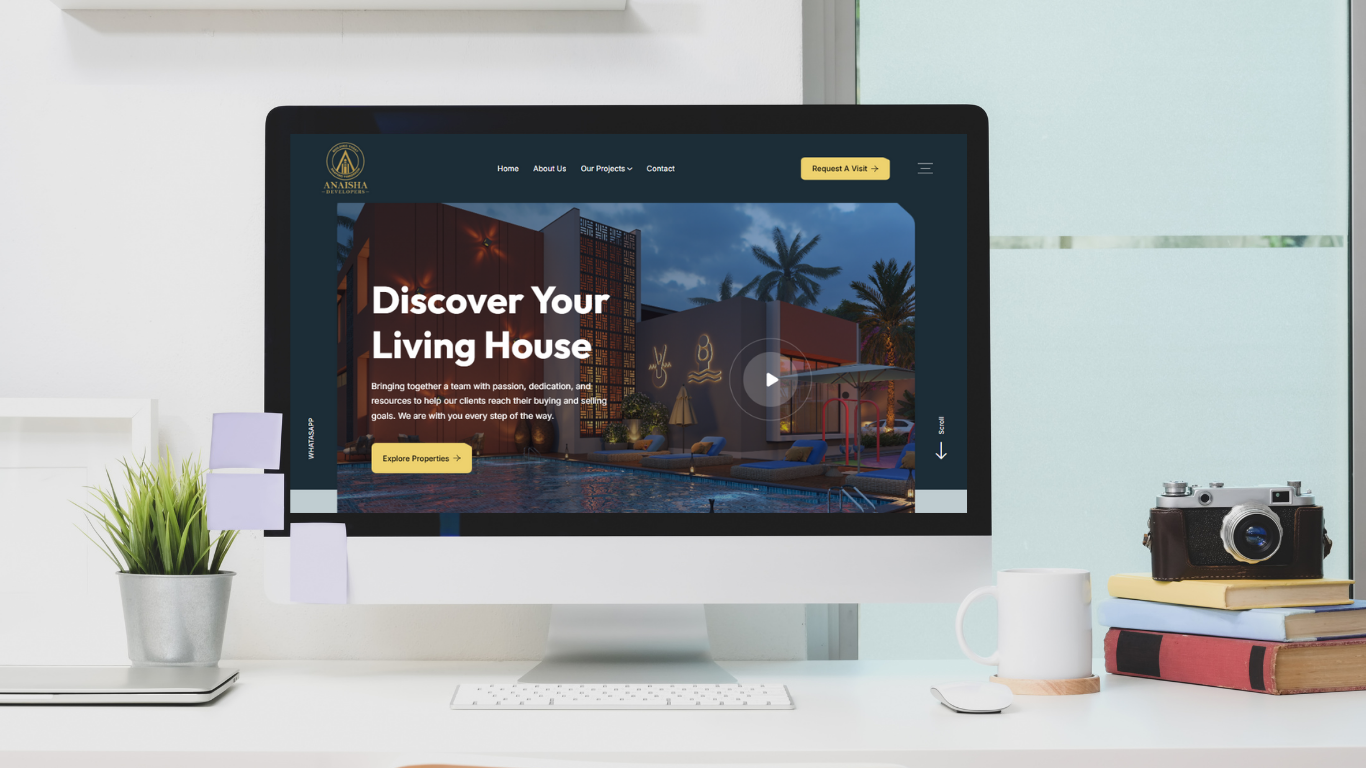
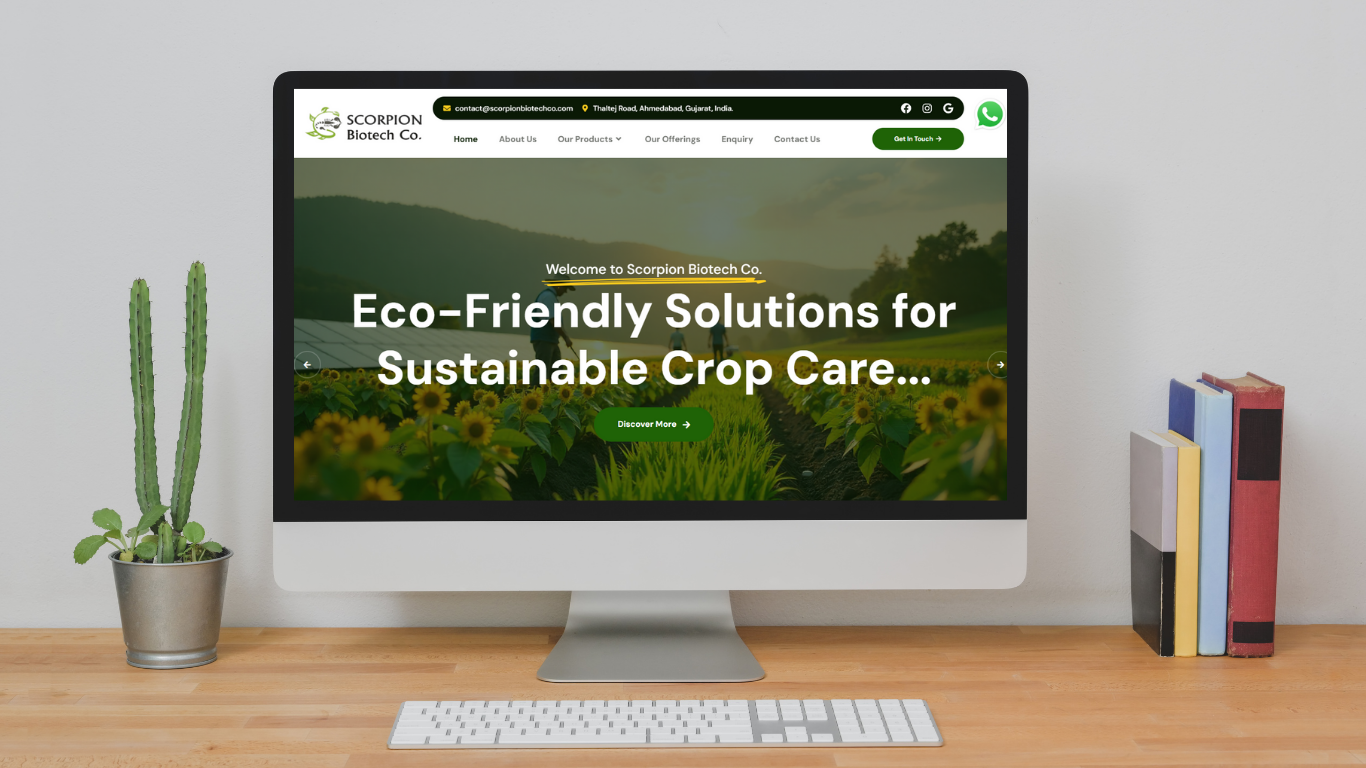
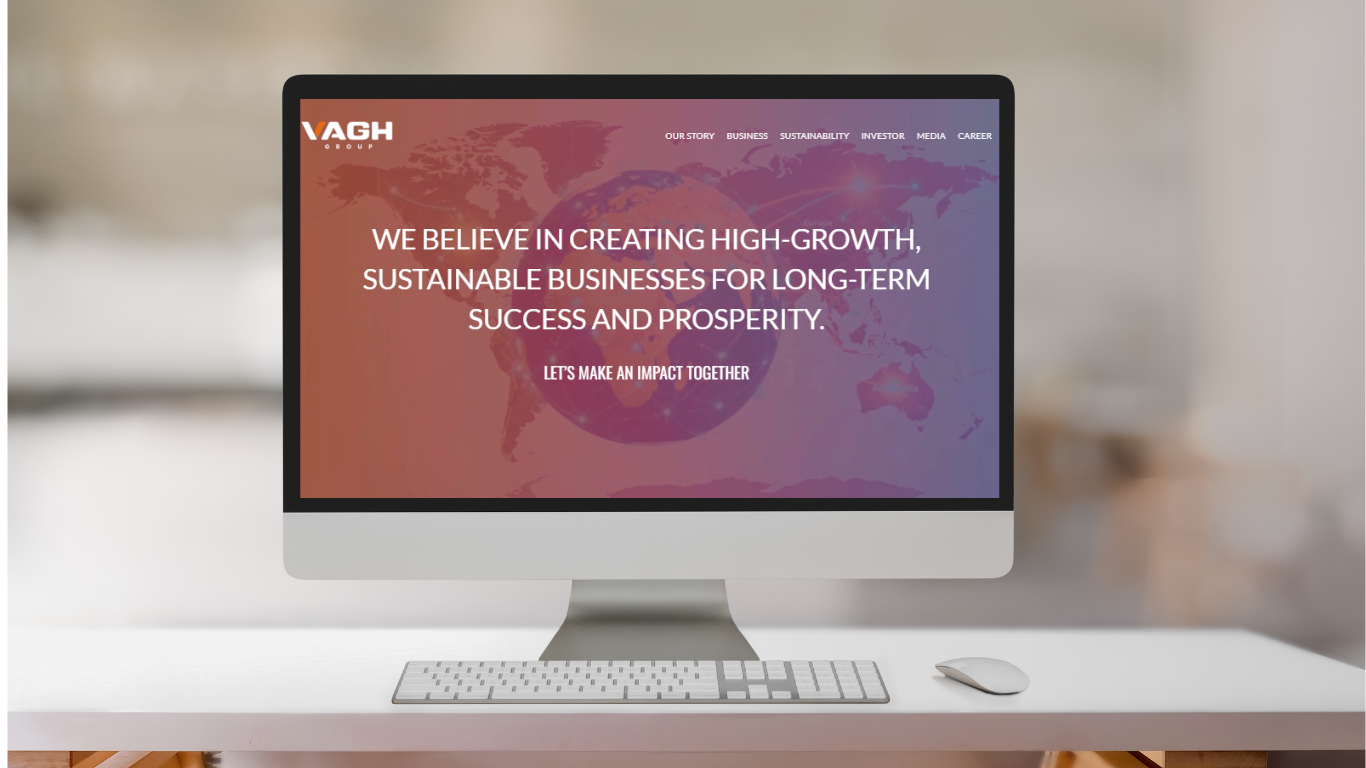
Featured WordPress development
How we redesign
What separates a redesign that holds rankings from one that loses them
Five stages. The first two happen before any design work starts, because the design work should be responding to data, not replacing it.
F
STEP 01/05
Frame what's actually broken
Analytics review, Search Console coverage report, Core Web Vitals field data, heatmap analysis, and a clear read of which pages generate revenue and which don't. The brief for the redesign comes from what this stage finds, not from a visual reference the client sends in the first email.
R
STEP 02/05
Research and audit the existing site
Full URL export and ranking map. Which URLs rank, for what, and at what volume. Which URLs generate conversions. Which internal link structures support the pages that matter. The SEO audit at this stage is what prevents the redesign from destroying the organic equity the old site built.
A
STEP 03/05
Architect the new site structure
New information architecture, URL schema, redirect map for every URL that changes, and the content migration plan. This stage is delivered as a document before design begins. A redesign that starts in Figma before the redirect map is complete is a redesign that will lose rankings.
M
STEP 04/05
Make: design, build, migrate
High-fidelity Figma designs for every template. Development on the agreed platform, WordPress, Shopify, WooCommerce, with staging environment from day one. Content migrated with metadata, redirects deployed and tested. QA against the URL list from the audit stage. Performance testing on mobile field conditions, not a lab score on a fast connection.
E
STEP 05/05
Evolve: launch, monitor, and stabilise
Go-live with the redirect map active and Search Console monitored daily for the first two weeks. Any crawl errors or ranking drops from the transition identified and fixed before they compound. Post-launch support from the same team that ran the migration.
A content-focused redesign on an existing platform takes four to eight weeks. A redesign involving a platform migration, custom theme development, and a large URL count takes three to five months. Anyone quoting before completing the audit stage is guessing at the scope.
Under the hood
What a properly executed redesign actually delivers
A redesign is a set of interconnected decisions. Each one has consequences for organic visibility, conversion rate, and how much the site costs to maintain from launch day forward.
05 · SEO migration
The rankings that survived the old site are the asset. Protecting them is not optional.
The average website redesign that changes URL structures without a complete redirect map loses 20–30% of organic traffic within thirty days of launch. (Industry pattern, flagged as directional) The redirect map, the canonical audit, and the Search Console monitoring in the weeks after launch are what separate a redesign that holds rankings from one that destroys them.
Every URL
mapped pre-launch
2 weeks
Search Console monitored post-launch
0
Unresolved redirect chains
01
UX audit and information architecture
Before a wireframe is drawn, a structured audit of the current site's user flows identifies where visitors drop off and why. The new information architecture responds to that data. Navigation, page hierarchy, and content organisation redesigned around how users actually move through the site, not around how the internal team organises the business.
02
Custom theme or template design
High-fidelity Figma designs for every page template, homepage, service or product pages, collection pages, landing pages, blog templates, with all states specified, all responsive breakpoints defined, and all interactive elements documented before Liquid or PHP development starts. Design that the developer builds, not approximates.
03
WordPress or Shopify development
Custom theme or child theme built to platform coding standards, carrying only the code the redesigned site requires. For WooCommerce redesigns, the product data model, pricing logic, and payment integrations migrated cleanly. For Shopify redesigns, metafield schema and section architecture rebuilt to match the new design system.
04
Performance engineering
Core Web Vitals pass in field data, not in a Lighthouse score on a throttled lab connection. Image optimisation, lazy load configuration, render-blocking script removal, and CDN setup. A redesign that doesn't improve mobile performance on the old site's traffic profile hasn't fixed the problem it was meant to fix.
06
Content migration and CMS configuration
Content migrated with metadata, structured data, and internal links intact. CMS blocks, page builder sections, and content types configured for the team running the site, so a content update doesn't require a developer and an editor doesn't break the layout trying to add a paragraph.
07
Structured data and technical SEO foundation
JSON-LD structured data for Organisation, WebPage, BreadcrumbList, Product, and Article built into the theme at template level. Canonical tags, Open Graph metadata, and XML sitemap rebuilt for the new URL structure. The technical SEO layer that makes content investment pay off, built into the redesign rather than retrofitted afterward.
08 · Handover and editor documentation
Theme code, plugin documentation, credentials, and a written editor guide delivered at project close. A CMS that the internal team can actually use, documented well enough that a new hire can update the site without a developer briefing.
WE BUILD WITH THE BEST TOOLS AND BEYOND THEM
WordPress
Shopify
WooCommerce
Figma
ACF
Gutenberg
Liquid
PHP
Screaming Frog
Search Console
Google Analytics 4
HotjarWordPress
Shopify
WooCommerce
Figma
ACF
Gutenberg
Liquid
PHP
Screaming Frog
Search Console
Google Analytics 4
Hotjar
An honest comparison
Full redesign vs targeted optimisation vs platform migration
| Criteria | Targeted optimisation | Full redesign (same platform) | Redesign with platform migration |
|---|---|---|---|
| Scope | Specific pages or components | Full site, new theme and architecture | Full site, new platform and theme |
| SEO risk | Low | Medium, managed with redirect map | Higher, requires full URL mapping |
| Timeline | Days to weeks | 4–12 weeks | 10–20 weeks |
| Cost (India-based) | 1,500–8,000 | 5,000–30,000 | 10,000–60,000 |
| Cost (US/UK agency) | 5,000–25,000 | 15,000–80,000 | 30,000–200,000+ |
| Best for | Isolated conversion or performance problems | Structural UX, outdated build, business repositioning | Legacy platform with technical debt too high to extend |
The correct choice depends on what the audit finds. We don't recommend a full redesign before completing a site audit, because the audit determines the scope and the scope determines whether a redesign is the right intervention.
The payback
Where a well-executed redesign pays back
~53%
Mobile visitors lost to slow load times
53% of mobile visitors abandon a site that takes more than three seconds to load. (Google) If the current site is failing this threshold and mobile represents the majority of sessions, the redesign's performance improvement alone, before any UX or conversion work, recovers a measurable share of otherwise-lost traffic on every session.
60–70%
Savings vs US and UK agency rates
A redesign quoted at $40,000 by a US agency costs $12,000 to $16,000 from a vetted India-based agency with an equivalent process. That differential funds the SEO, content, or paid acquisition investment the redesigned site was built to support. The build is cheaper. The budget for what the build enables is larger.
// Wisemonk India IT Services Analyst Report, 20260
Organic rankings lost to the migration
A redesign managed with a complete URL audit, a 301 redirect map for every changed URL, and two weeks of Search Console monitoring after launch loses no organic rankings to the migration itself. Rankings are lost to redesigns that skip the audit. They're protected by ones that don't.
Ownership
Do you own the redesigned site? Yes. Everything.
The theme files, the plugin code, the Figma source files, the redirect map documentation, all transferred at project close. No hosting arrangement where the server credentials belong to the agency. No framework that requires ongoing involvement to maintain. Source code, design files, and documentation, yours.
// redesign.config
owner = "you";
source_files = "fully_transferred";
rankings = "protected_in_migration";
owner = "you";
source_files = "fully_transferred";
rankings = "protected_in_migration";
Learn from these
Common mistakes in website redesign projects
A
Choosing a new visual direction before completing an SEO audit. The most expensive redesign outcome is a site that looks significantly better and ranks for significantly fewer terms because nobody mapped the URLs that were generating organic traffic before the developer touched them.
B
Briefinng the designer from a competitor's site rather than from conversion data. A site that looks like a competitor's site converts like a competitor's site, not like your business. The brief should come from analytics, not aesthetics.
C
Treating mobile as a responsive afterthought to a desktop design. Mobile accounts for the majority of sessions on most sites. A design built desktop-first and adapted for mobile produces a worse mobile experience than one built mobile-first. The sequence matters.
D
Going live without the redirect map tested. A redirect map that hasn't been tested before launch will have chains, loops, or missing entries. These are discovered post-launch through ranking drops and 404 errors. Test every redirect before the DNS switch, not after it.
E
Cutting content in the redesign. Pages that ranked for long-tail terms get merged or removed because they seemed redundant. The rankings disappear with them. The correct approach is to identify which pages contribute to organic visibility before making any content decisions.
Answered directly
Frequently asked questions
How much does a website redesign cost in India in 2026?
India-based agency redesign costs: targeted optimisation 1,500–8,000, full redesign on the same platform 5,000–30,000, redesign with platform migration 10,000–60,000. US and UK agencies quote the same scope at 15,000–200,000+. (innowise.com, 2026, for US/UK benchmarks) The correct number for your project is confirmed after the site audit, which determines the actual scope.
Will a redesign hurt our SEO rankings?
It will if URLs change without 301 redirects, if content that was ranking gets removed or rewritten without checking its organic contribution, or if the new site's crawlability is worse than the old one's. A redesign managed with a pre-launch URL audit, a complete redirect map, and post-launch Search Console monitoring protects rankings through the transition.
How long does a website redesign take?
A targeted optimisation takes days to weeks. A full redesign on the same platform takes four to twelve weeks depending on site size and content volume. A redesign involving a platform migration takes ten to twenty weeks. Timeline is confirmed after the audit stage, not before it.
Do you redesign ecommerce sites?
Yes. WooCommerce redesigns with product data migration and pricing logic intact, Shopify theme redesigns with metafield schema preserved, and platform migrations from Magento or BigCommerce with full URL mapping and order history migration.
Can you redesign a site without taking it offline?
Yes. The redesign runs on a staging environment and is deployed to production in a planned cutover. The live site stays live until the staging version is fully QA'd, the redirect map is tested, and the go-live is confirmed. Downtime during cutover is typically minutes, not hours.
What platforms do you redesign for?
WordPress and WooCommerce, Shopify and Shopify Plus, and migrations between platforms. For businesses deciding whether to stay on the current platform or migrate, we give an honest assessment based on what the audit finds, not based on which platform we prefer to build on.
What do we receive at handover?
Theme source files, plugin documentation, Figma design files, redirect map, Search Console baseline screenshots, credentials for every service connected to the site, and a written editor guide for the CMS. Everything needed for an in-house team or a different agency to maintain and extend the site without a briefing from us.
Ready when you are
Start with the audit, not a quote
Send us the URL. We'll review your Search Console data, your Core Web Vitals field performance, and the current site's structure before scoping anything. The audit tells us what a redesign needs to address, and whether a redesign is actually what you need.
+91 9898 927 052 · contact@multidivs.com